Nucleic acid conjugates: unlocking new functions for biology and medicine
We are entering the age of nucleic acid (DNA/RNA) technologies. Nucleic acids, such as plasmids and small interfering (si)RNA, are essential tools in modern biology to study disease. Cell-free expression systems and synthetic cells are enabling researchers to study biology in new ways. Messenger (m)RNA vaccines have been administered worldwide to overcome the COVID-19 global pandemic and nucleic acids drugs, such as antisense oligonucleotides (ASOs), have entered the market that can target genetic diseases not accessible to other modalities. Their potential lies in their ability to target specific genes and regulatory pathways, offering precise and personalised tools and treatments.
A major goal of the Booth group is to develop the next generation of nucleic acid technologies, by developing new methods to overcome current major challenges in their synthesis, modification, cell delivery, and targeting. We achieve this through conjugation of various moieties, including small molecules, peptides/proteins, polymers, and nanoparticles. Our next-generation nucleic acid technologies will form the basis of targeted therapeutics and new technologies for basic research.

Selected publications:
Magnetic Activation of Spherical Nucleic Acids for the Remote Control of Synthetic Cells. E.Parkes, A.Al Samad, G.Mazzotti, C.Newell, B.Ng, A.Radford, M.J.Booth. Nature Chemistry, 17, 1505 (2025) DOI:10.1038/s41557-025-01909-6
Engineering antisense oligonucleotides for targeted mRNA degradation through lysosomal trafficking. D.Kashyap, T.Milne, M.J.Booth. Chemical Science, 16, 13096 (2025)
DOI:10.1039/D5SC03751D
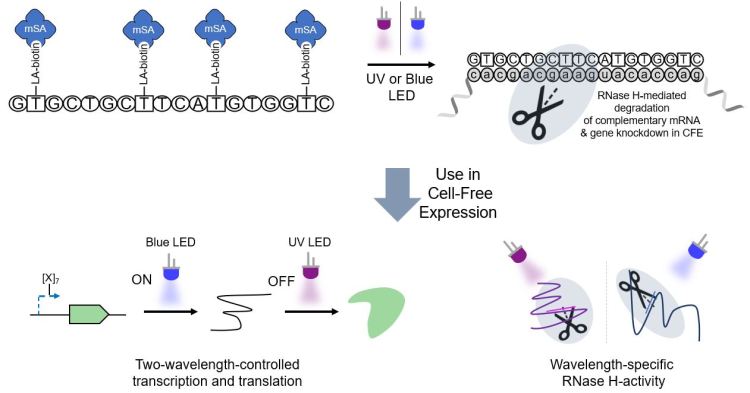
Orthogonal light-activated DNA for patterned biocomputing within synthetic cells. D.Hartmann, R.Chowdhry, J.M.Smith, M.J.Booth. Journal of the American Chemical Society 145, 17, 9471 (2023) DOI:10.1021/jacs.3c02350
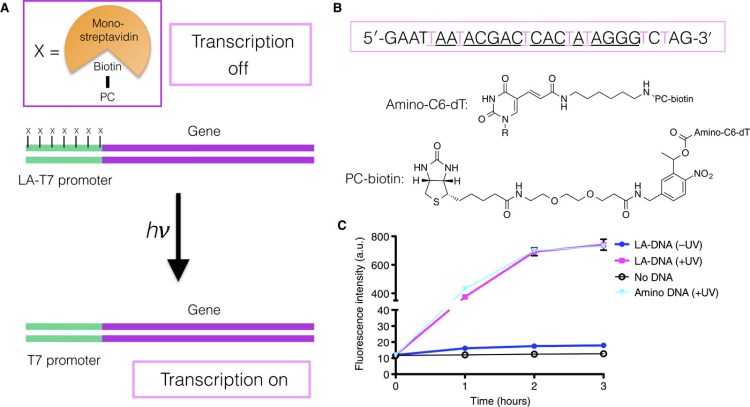
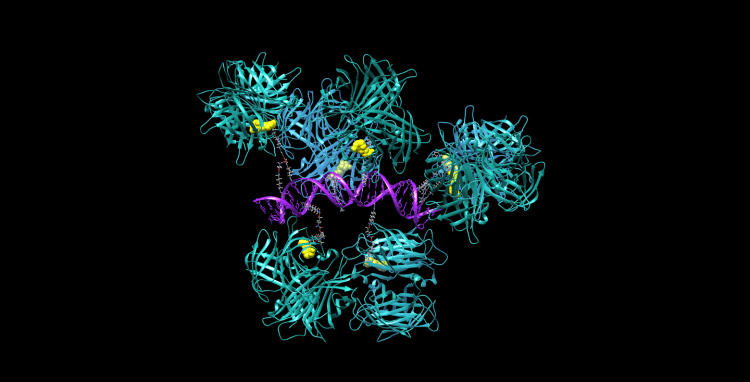
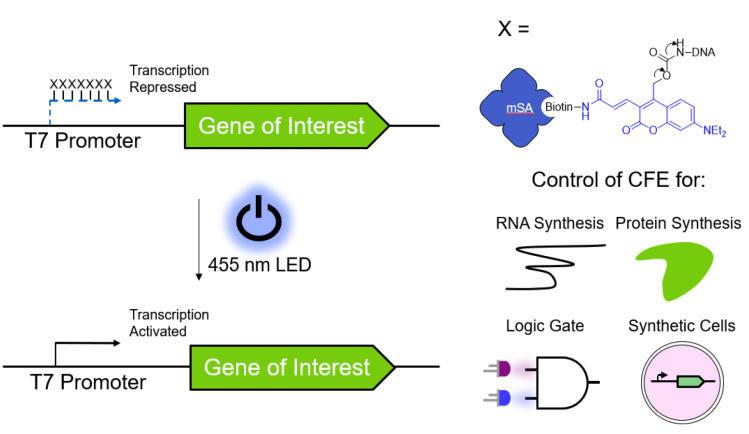
Precise, orthogonal remote-control of cell-free systems using photocaged nucleic acids. G.Mazzotti, D.Hartmann, M.J.Booth. Journal of the American Chemical Society 145, 17, 9481 (2023) DOI:10.1021/jacs.3c01238
Selected Reviews:
Nucleic Acid Conjugates: Unlocking Therapeutic Potential. D.Kashyap, M.J.Booth. ACS Bio & Med Chem Au, 5 (1), 3 (2024) DOI:10.1021/acsbiomedchemau.4c00092
Controlling gene expression with light: a multidisciplinary endeavour. D.Hartmann, J.M.Smith, G.Mazzotti, R.Chowdhry, M.J.Booth. Biochemical Society Transactions, BST20200014 (2020) DOI:10.1042/BST20200014
Biochemical engineering of synthetic cells
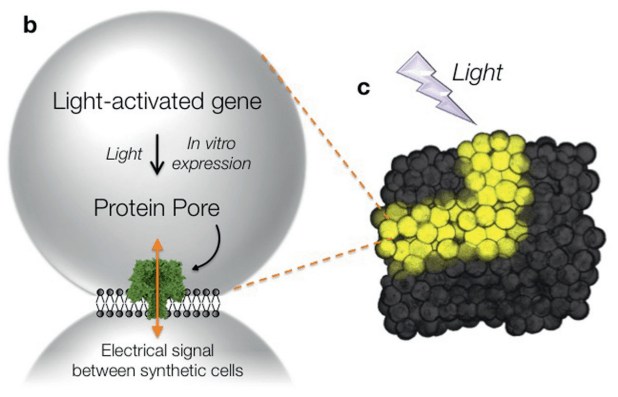
Constructed from the bottom-up and designed to mimic living cells, synthetic cells possess useful functionalities of genetically engineered organisms, while avoiding many drawbacks. Furthermore, they can be built from both biological and synthetic parts, creating unique physical and chemical properties. These modular micron-sized compartments can be engineered to synthesise and release molecules to communicate with non-living and living cells. This opens exciting applications from studying natural cellular processes to the development of smart drug delivery devices. However, currently there are very limited signalling mechanisms and methods of control of synthetic cell function. We are working to develop both of these areas to create synthetic cells able to deliver a large variety of signals and molecules with high precision. We achieve this by combining biological systems with modified nucleic acids, within the synthetic cells. Our biochemically engineered synthetic cells will enable new and more precise methods to communicate with living cells and target diseases.
Watch Mike explain our synthetic cell research in this 2024 Biochemical Society 15-minute webinar (start at 19 minutes) or this 2025 Build-A-Cell webinar.


Selected publications:
Magnetic Activation of Spherical Nucleic Acids for the Remote Control of Synthetic Cells. E.Parkes, A.Al Samad, G.Mazzotti, C.Newell, B.Ng, A.Radford, M.J.Booth. Nature Chemistry, 17, 1505 (2025) DOI:10.1038/s41557-025-01909-6
Engineering cellular communication between light-activated synthetic cells and bacteria. J.M.Smith, D.Hartmann, M.J.Booth. Nature Chemical Biology, 19, 1138 (2023) DOI: 10.1038/s41589-023-01374-7
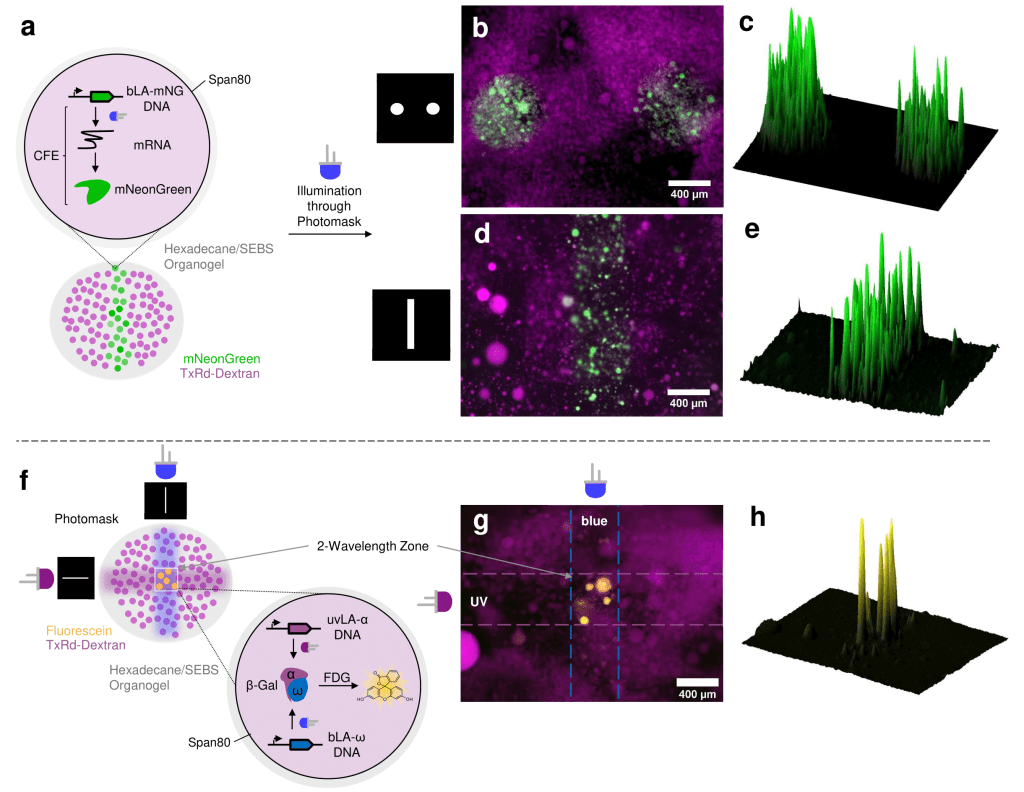
Orthogonal light-activated DNA for patterned biocomputing within synthetic cells. D.Hartmann, R.Chowdhry, J.M.Smith, M.J.Booth. Journal of the American Chemical Society 145, 17, 9471 (2023) DOI:10.1021/jacs.3c02350
Multi-responsive hydrogel structures from patterned droplet networks. F.G.Downs, D.J.Lunn, M.J.Booth, J.B.Sauer, W.J.Ramsay, R.G.Klemperer, C.J.Hawker, H.Bayley. Nature Chemistry, 12, 363 (2020) DOI:10.1038/s41557-020-0444-1
Selected Reviews:
Strategies and applications of synthetic cell communication. H.Moghimianavval, C.Newell, P.Parvizian, M.J.Booth, A.Liu. Nature Chemical Biology, 21, 1317 (2025) DOI:10.1038/s41589-025-02002-2
Controlling Synthetic Cell-Cell Communication. J.M.Smith, R.Chowdhry, M.J.Booth. Frontiers in Molecular Bioscience, 8, 809945 (2022) DOI: 10.3389/fmolb.2021.809945
 Booth Research Group